The fossil cabinet
Each dinosaur here has its label: who named it, when, and what the fossils show. Every fact links to the page it was checked against. Sizes are estimates and vary between studies, so they carry the date we checked them (24 Oct 2026).
What makes a dinosaur
Upright legs, a famous name, and a family tree that still has living members.
- Owen based the group on three animals found in southern England: the meat-eating Megalosaurus, the plant-eating Iguanodon and the armoured Hylaeosaurus. [source]
- All dinosaurs stood with their legs straight underneath them, like birds, rather than sprawled out to the side like a lizard’s. [source]
- Birds are feathered dinosaurs. They evolved from theropods in the Late Jurassic, and they’re the only dinosaur lineage known to have survived the mass extinction about 66 million years ago. [source · checked 24 Oct 2026]
- Plenty of Mesozoic dinosaurs were human-sized or smaller. [source]
- Dinosaurs live on every continent today, as birds, and their fossils have been found on every continent too. [source]
- Scientists will probably never be certain which dinosaurs were the largest and smallest that ever lived, because only a tiny fraction of animals ever became fossils. [source]
Theropods: the “beast feet”
The two-legged meat-eaters, and the group birds belong to.
- Theropod means “beast feet”. O. C. Marsh coined the name in 1881. [source]
- Most theropods walked on three toes, which is why their footprints are three-toed. [source]
- Confusingly, birds belong to the lizard-hipped dinosaurs, the saurischians, not the bird-hipped ones. [source]
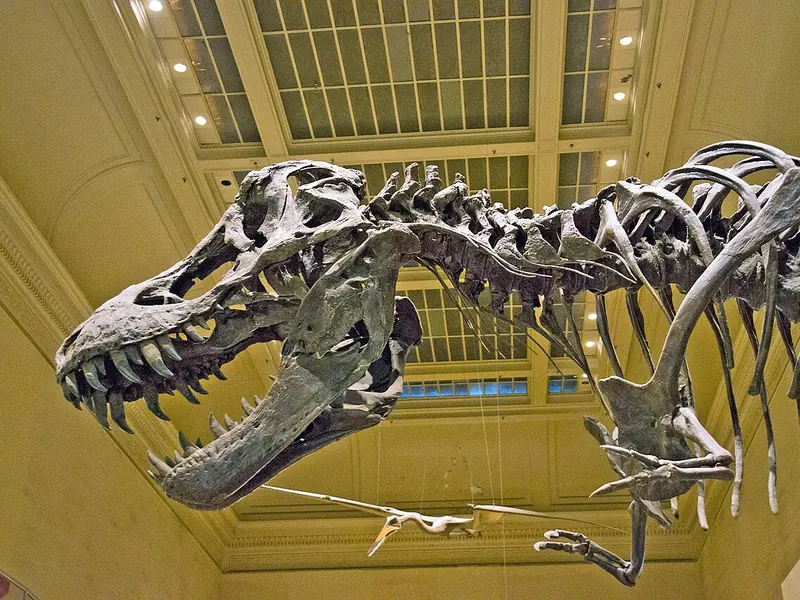
Tyrannosaurus rex · Named in 1905 · Henry Fairfield Osborn
- Tyrannosaurus rex was named in 1905 by Henry Fairfield Osborn. The name means “tyrant lizard king”. [source]
- T. rex had short arms with two clawed fingers, but they were unusually powerful for their size. [source]
- T. rex’s estimated bite force is the largest of any land animal. [source]
- Size estimates vary. The most complete T. rex skeleton measures 12.3–12.4 m long, and most modern estimates say the biggest could have topped 13 m. [source · checked 24 Oct 2026]
- Most palaeontologists today accept that T. rex was a predator. The idea that it was mainly a scavenger has been discredited. [source]
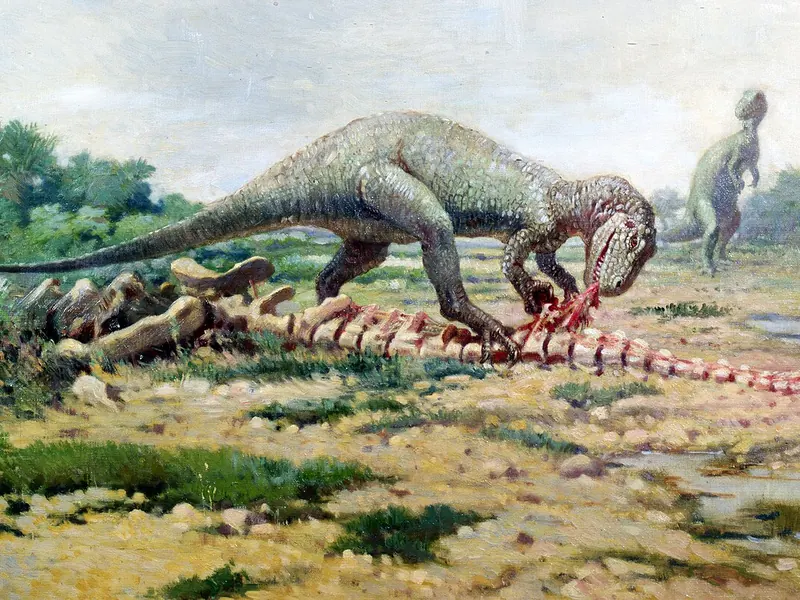
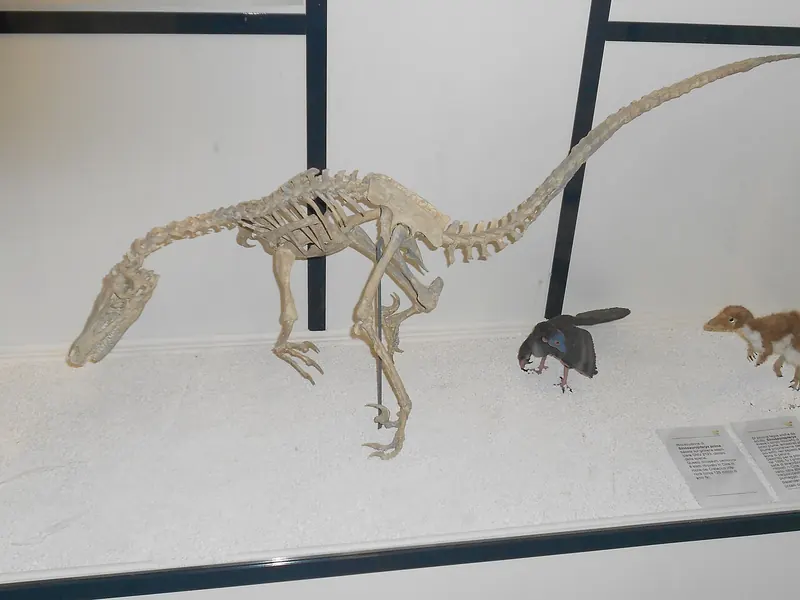
Velociraptor · Named in 1924 · Henry Fairfield Osborn
- Velociraptor, “swift robber”, was named and described in 1924 by Henry Fairfield Osborn. [source]
- The real Velociraptor was roughly the size of a turkey, much smaller than the “raptors” in the Jurassic Park films. [source]
- Quill knobs, where big wing feathers attach, have been reported on a Velociraptor arm bone. [source]
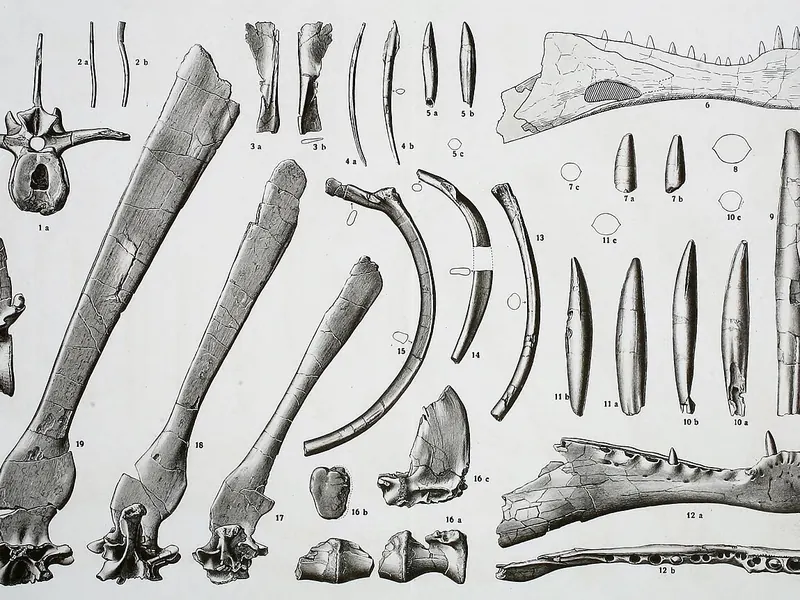
Spinosaurus · Described in 1915 · Ernst Stromer
- Spinosaurus was described by Ernst Stromer in 1915, from Egyptian fossils found in 1912. The original fossils were destroyed in the Second World War. [source]
- Spinosaurus had spines on its back at least 1.65 m long, which probably held up a sail of skin. [source · checked 24 Oct 2026]
- There’s evidence that Spinosaurus was semi-aquatic, but how well it could swim is hotly argued. [source]
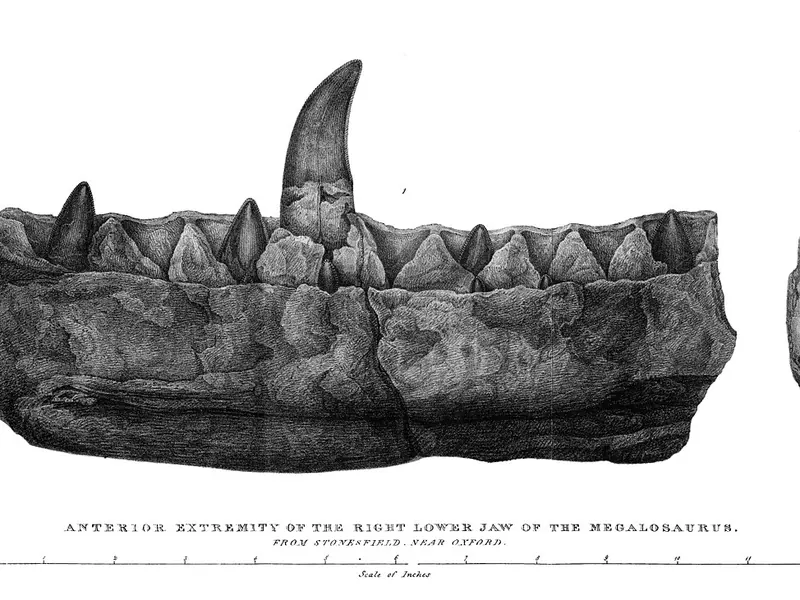
Megalosaurus · Named in 1824 · William Buckland
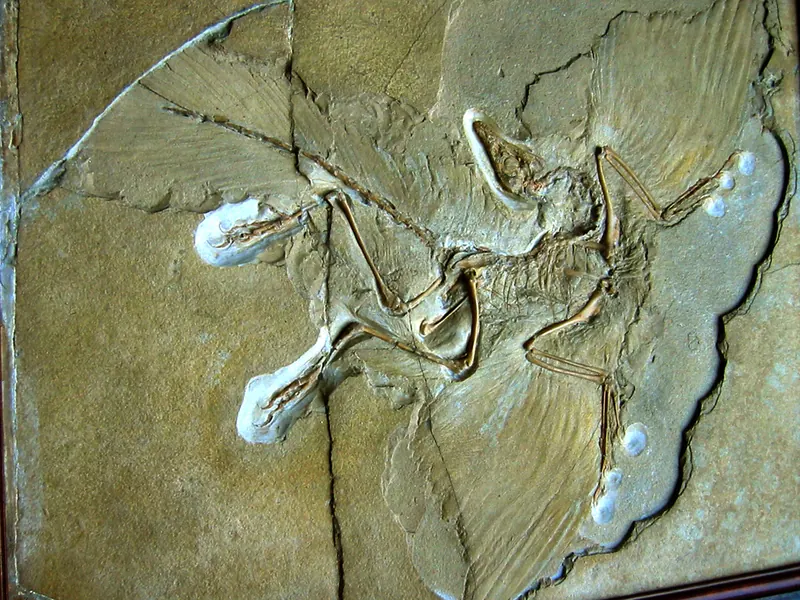
Archaeopteryx · Named in 1861 · Hermann von Meyer
- The first Archaeopteryx find, a single feather, was described in 1861 by Hermann von Meyer. The name means “ancient wing”. [source]
- Archaeopteryx was named from a single feather in 1861. The first skeleton turned up the same year, two years after Darwin published On the Origin of Species. [source]
- Archaeopteryx was about the size of a magpie. [source]
- Every Archaeopteryx fossil found so far comes from limestone near Solnhofen, in Germany. [source]
Sauropods: the long necks
The biggest animals ever to walk on land, as far as anyone can tell.
- Sauropod means “lizard feet”. Sauropods had very long necks, long tails, small heads and four thick, pillar-like legs. [source]
- Sauropod neck bones were full of air spaces, which made those enormous necks lighter. [source]
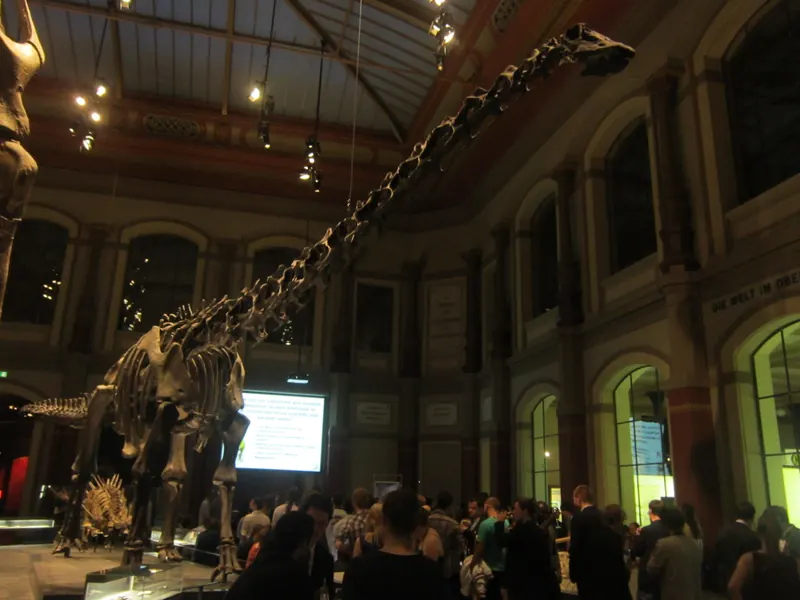
Diplodocus · Named in 1878 · Othniel Charles Marsh
- Diplodocus means “double beam”, after bones under its tail. Othniel Charles Marsh coined the name in 1878. [source]
- Diplodocus had a very long, whip-like tail made of about 80 vertebrae. [source]
- Diplodocus carnegii is one of the longest dinosaurs known from a complete skeleton: 24–26 m long, by the estimates on its Wikipedia page. [source · checked 24 Oct 2026]
- A cast of “Dippy” the Diplodocus was on show at the Natural History Museum in London from 1905 until 2017. [source]
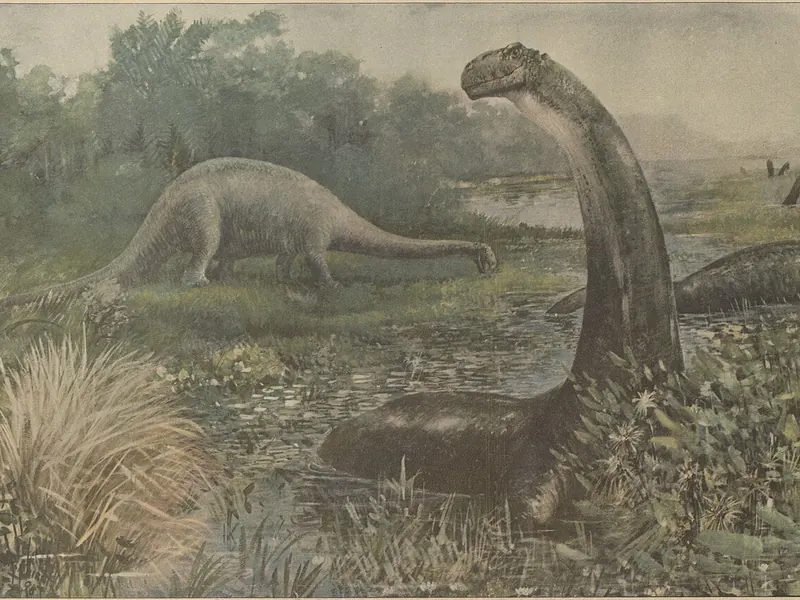
Brontosaurus · Announced in 1879 · Othniel Charles Marsh
- Brontosaurus means “thunder lizard”. Othniel Charles Marsh announced the skeleton in 1879. [source]
- In 1903 Elmer Riggs decided Brontosaurus was too like Apatosaurus to be a separate genus, so for decades the name was dropped. [source]
- A 2015 study by Emmanuel Tschopp and colleagues found Brontosaurus to be distinct after all, though some palaeontologists still treat it as Apatosaurus. [source]
Ornithischians: the “bird-hipped”
Horns, frills, plates, clubs and crests. All plant-eaters, and despite the name, not the bird branch.
- Ornithischia means “bird-hipped”, because these dinosaurs’ hips look a bit like a bird’s. Saurischia means “lizard-hipped”. [source]
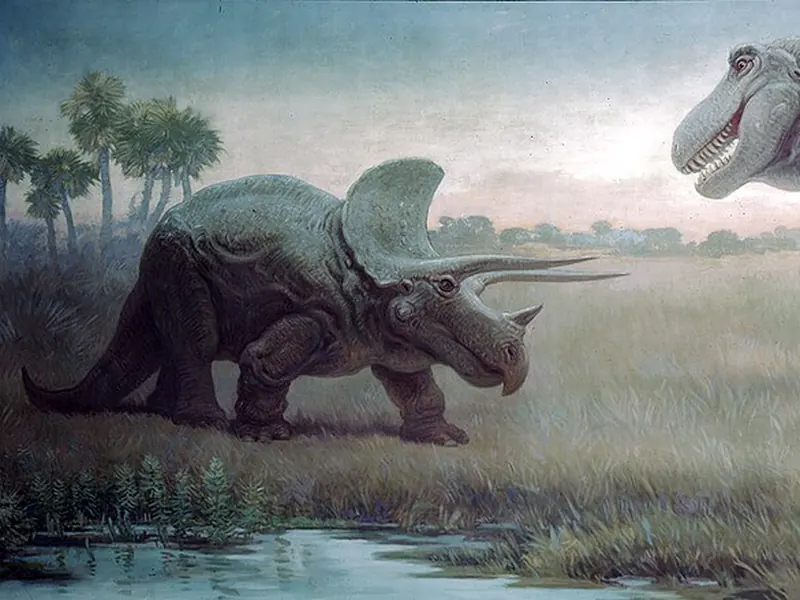
Triceratops · First described in 1889 · Othniel Charles Marsh
- Triceratops means “three-horned face”. It was first described in 1889 by Othniel Charles Marsh. [source]
- Triceratops shared its world with T. rex, and was most likely hunted by it. [source]
- Triceratops was around 8–9 m long, by the estimates on its Wikipedia page. [source · checked 24 Oct 2026]
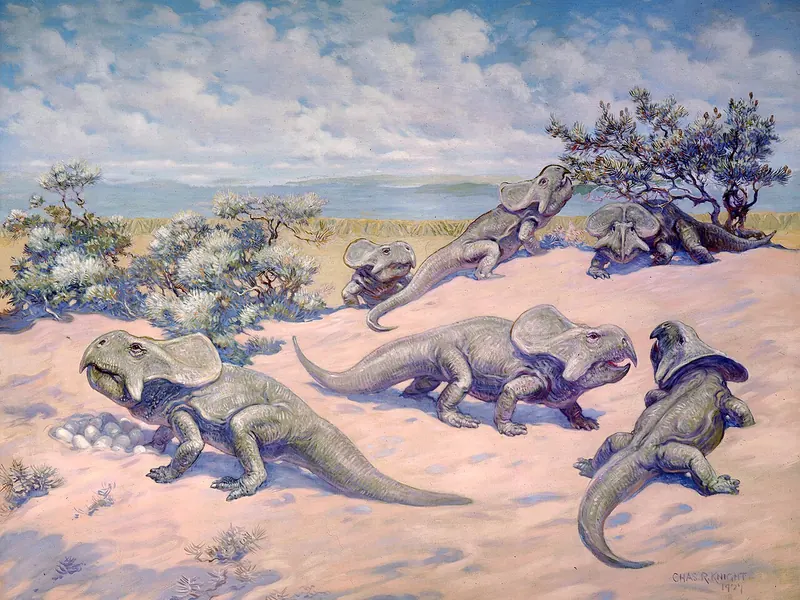
Protoceratops · Described in 1923 · Walter Granger and William K. Gregory
- Protoceratops andrewsi was formally described in 1923 by Walter Granger and William K. Gregory, from a skull found in Mongolia. [source]
- The famous “Fighting Dinosaurs” fossil, found in 1971, preserves a Velociraptor and a Protoceratops locked in combat. [source]
- Eggs found in Mongolia were first thought to belong to Protoceratops. They’re now known to be Oviraptor eggs. [source]
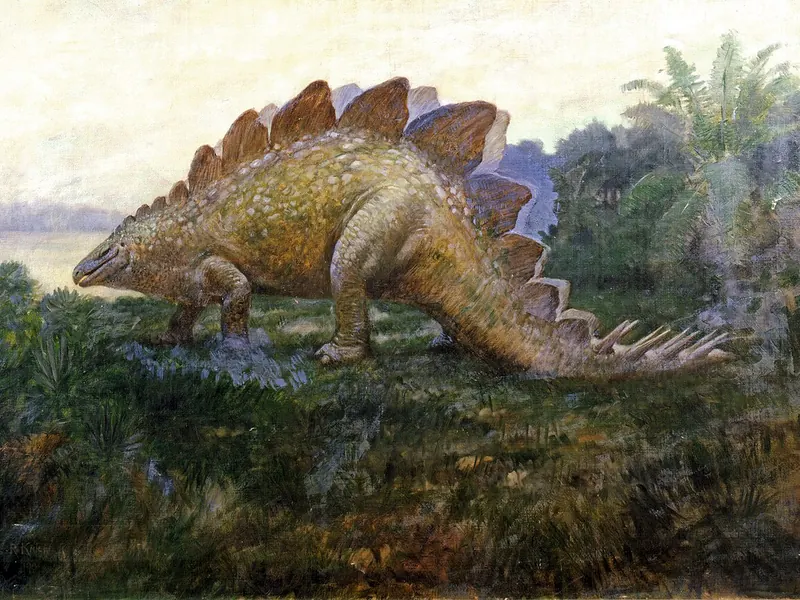
Stegosaurus · Described in 1877 · Othniel Charles Marsh
- Stegosaurus was described by Othniel Charles Marsh in 1877. At first he thought the bones came from an aquatic, turtle-like animal. [source]
- For such a big animal, Stegosaurus had a small braincase, no larger than a dog’s. [source]
- Today it’s generally agreed that Stegosaurus used its spiked tail for defence, and its plates mainly for display. [source]
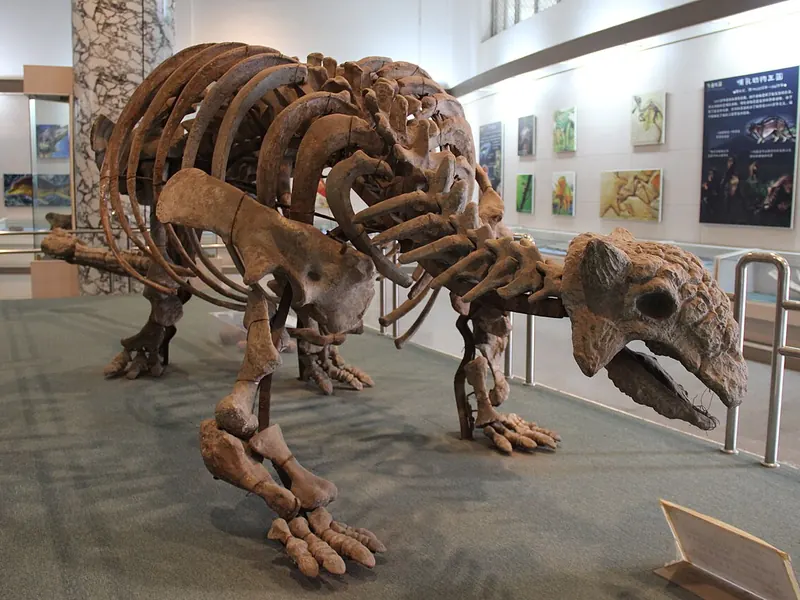
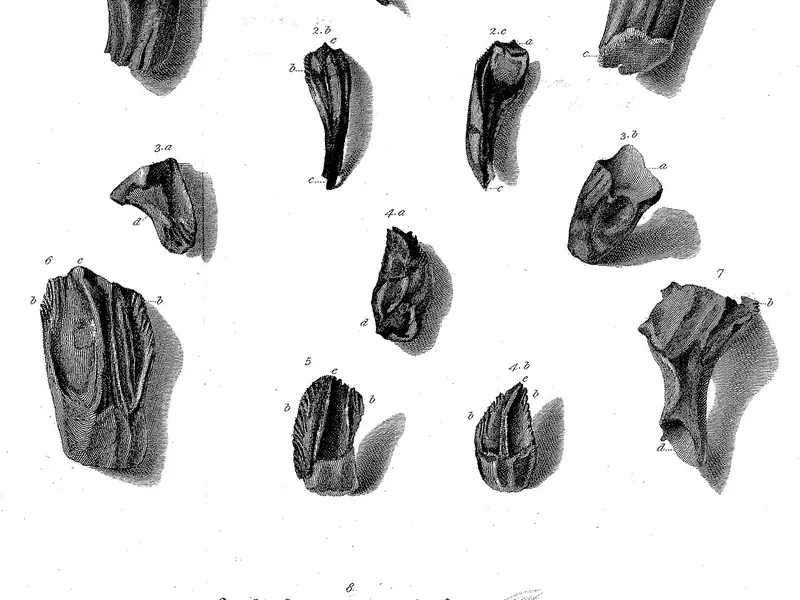
Iguanodon · Named in 1825 · Gideon Mantell
- Iguanodon was named in 1825 by the English geologist Gideon Mantell. It was the second dinosaur ever formally named, after Megalosaurus. [source]
- Iguanodon, named in 1825, means “iguana tooth”. [source]
- Early reconstructions put Iguanodon’s spike on its nose. Later fossils showed it was really a thumb spike. [source]
- There’s a popular story that Mary Ann Mantell found the first Iguanodon teeth in Sussex in 1822. Gideon Mantell himself said in 1851 that he had found them, and historians still argue about it. [source]
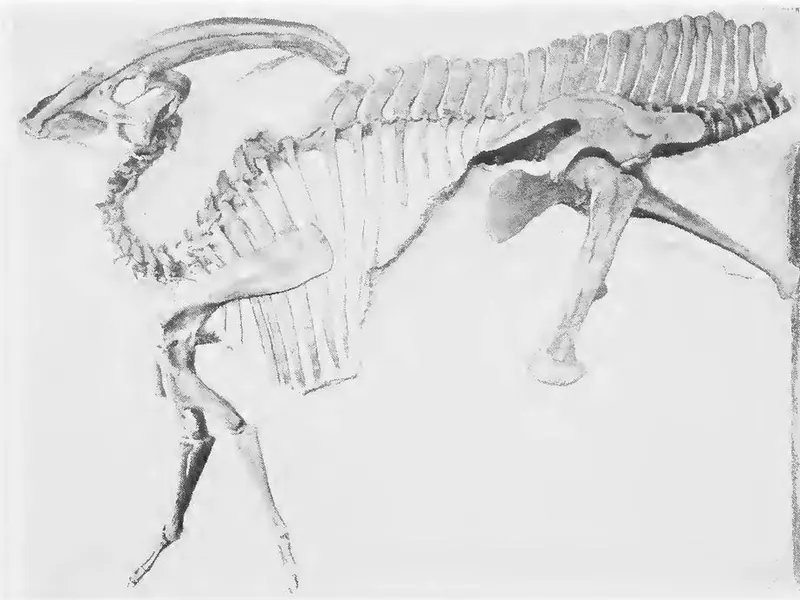
Parasaurolophus · First described in 1922 · William Parks